
A Story Most Business Owners Don’t Realize They’re Living
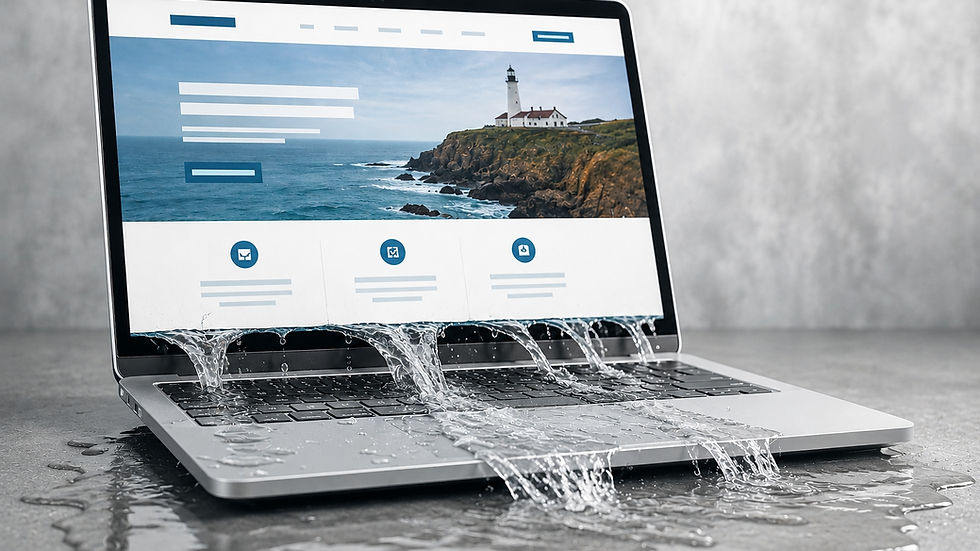
Last Tuesday morning, a business owner reached out. Let’s call him Mike.
Mike runs a solid company with a good reputation. He gets steady word-of-mouth referrals. A couple of years ago, he invested in a website—clean design, professional photos, everything you’d expect.
On paper, it looked like it should work. But he had one problem he couldn’t figure out:
“People visit my website… but they don’t contact me.”
Sound familiar?
The Website That “Looked Fine”
When I pulled up Mike’s website, nothing jumped out as broken. There were no glaring issues or obvious errors. In fact, most people would say:
“That’s a good-looking site.”
And they’d be right. But that’s exactly where the problem started. Because websites don’t fail loudly; they fail quietly.
The First Leak: Confusion
Within five seconds, one question came up:
👉 What does Mike want me to do right now?
Should I call? Fill out a form? Request a quote? It wasn’t obvious.
There were buttons, but no clear direction guiding the visitor. When people have to think too much, they don’t act. They leave.
The Second Leak: Lost Attention
On mobile, the site loaded just a little too slowly. It wasn’t broken or disastrous. Just slow enough to create a big decision: Stay… or hit the back button?
Most business owners never see this happening. But it’s happening every single day. Quietly. Consistently. Expensively.
The Third Leak: Blending In
The messaging sounded safe. “Quality service.” “Customer satisfaction.” All true, but also completely forgettable. Nothing clearly answered:
Why should I choose Mike over anyone else?
When a business doesn’t stand out, the customer decision becomes easy: Keep looking.
The Fourth Leak: Missing Trust
There was no strong proof. No standout testimonials. No clear results. No visible credibility. Without trust, people hesitate. And hesitation kills conversions.
The Fifth Leak: Mobile Friction
Buttons were slightly off. Spacing wasn’t quite right. Forms felt like work instead of a simple action. Individually, these seem minor. Together, they quietly push people away.
Here’s What Hit Mike the Hardest
After walking through everything, he paused and said:
“So my website isn’t broken… it’s just not working.”
Exactly. That’s the reality for most businesses. Your website isn’t failing because it’s bad; it’s failing because it’s leaking opportunities. Every missed click, every confused visitor, every abandoned page—that’s revenue slipping away without a trace.
What Changed (And Why It Matters)
We didn’t rebuild Mike’s website from scratch. We fixed what actually mattered:
Clear, direct calls-to-action
Faster load performance
Messaging that speaks to real customers
Strategic trust placement
Mobile-first improvements
The Result?
More calls. More inquiries. More consistency. Same traffic. Better outcomes.
The Part Most People Miss
You don’t always need more visitors. You need to stop losing the ones you already have. That’s where real growth lives.
So Here’s the Question
If someone landed on your website right now, would they know exactly what to do? Would they trust you? Would they contact you? Or would they leave—without you ever knowing they were there?
Let’s Find Out
At SiteRelaunch, we don’t just look at websites. We break them down like a real customer would and show you exactly:
Where you’re losing leads
What’s causing it
What to fix first for the biggest impact
No fluff. No guesswork. Just clarity you can actually use.
Because your website shouldn’t just exist… it should work.
Understanding the Importance of a Functional Website
A functional website is crucial for any business. It serves as the digital storefront, where potential customers form their first impressions. If your website isn’t working effectively, you could be missing out on valuable opportunities.
The Role of User Experience
User experience (UX) is essential. A website that’s easy to navigate encourages visitors to stay longer. If they can find what they need quickly, they’re more likely to engage with your business.
The Impact of Speed
Website speed is another critical factor. A slow-loading site can frustrate users. In today’s fast-paced world, people expect instant access to information. If your site doesn’t deliver, they’ll move on to a competitor.
Crafting a Unique Message
Your messaging should resonate with your audience. It should clearly communicate your unique value proposition. What sets you apart from the competition? Make sure your visitors know why they should choose you.
Building Trust with Your Audience
Trust is vital in converting visitors into customers. Display testimonials, case studies, and any relevant certifications prominently. This social proof can significantly impact a visitor's decision to engage with your business.
Optimizing for Mobile
With more people browsing on mobile devices, ensuring your site is mobile-friendly is essential. A responsive design enhances user experience and can lead to higher conversion rates.
Conclusion
In conclusion, your website should be a powerful tool for your business. It should attract visitors, engage them, and convert them into customers. If you’re not seeing the results you want, it might be time to assess your site for leaks.
By understanding and addressing these issues, you can turn your website into a revenue-generating machine. Remember, it’s not just about getting more visitors; it’s about making the most of the visitors you already have.
Let’s work together to ensure your website is not just a digital presence but a thriving part of your business strategy.


Comments